
The fastest way to turn a dream vacation into a meltdown is to book too much, move too fast, and assume everyone wants the same trip. Family travel in the USA can feel like pure magic – beach mornings, national park sunsets, city food crawls, theme park thrills – but only when the plan fits your real family, not some perfect version of it.
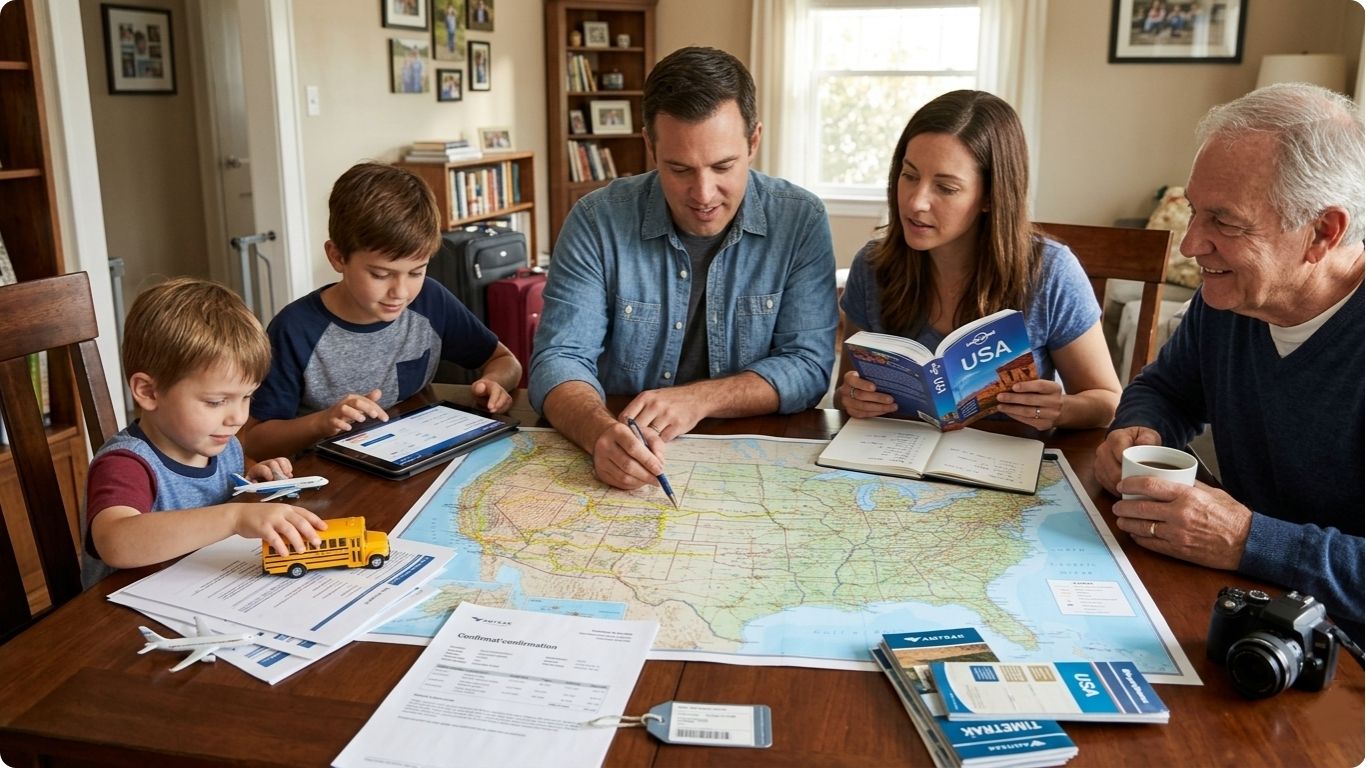
This family trip planning guide USA travelers can actually use is built for one goal: helping you make confident choices faster. If you are staring at ten tabs, three budget scenarios, and two kids with totally different ideas of fun, start here.
Start Your Family Trip Planning Guide USA Style: Pick the Right Trip

Before you compare flights or hotels, decide what kind of family trip you are building. That sounds obvious, but it saves hours of second-guessing.

A beach trip in Florida, a national park loop in Utah, a city break in Chicago, and a theme park vacation in Orlando all ask very different things from your time, energy, and budget. Families often get stuck because they try to combine all of them into one week. That usually looks exciting on paper and exhausting in real life.
Start with three simple questions. Do you want relaxation, activity, or variety? How much transit can your group handle in a day? And what matters more this trip – iconic sights or easy family rhythm?
If you are traveling with toddlers, one destination with a predictable schedule often beats a multi-stop itinerary. If you have teens, a trip with a mix of freedom and headline attractions usually lands better. If your family spans ages, the winning move is often a base-city trip with flexible day options.
Choose a Destination That Matches Your Season

The USA gives families incredible range, but timing changes everything. A destination that feels dreamy in one month can feel crowded, stormy, or overpriced in another.
Summer is peak family travel season for good reason. School is out, national parks are open, and beach towns are buzzing. But it is also when prices climb and popular spots get packed. If you want Yellowstone, San Diego, Cape Cod, or the Smoky Mountains in summer, plan earlier than you think.
Spring and fall are often the sweet spots for families with flexible schedules or school break windows. You can get lighter crowds, better hotel availability, and more comfortable temperatures in places like Washington, DC, Arizona, Southern California, and parts of the Southeast.

Winter depends on your trip style. Ski families can lean into Colorado or Utah. Warm-weather seekers often head for South Florida, Southern California, Arizona, or Hawaii. Families who love festive energy may prefer New York City, Chicago, or smaller Christmas towns with seasonal events.
The trade-off is simple. Peak season usually gives you the fullest experience, but shoulder season often gives you the easier one.
Build a Budget Around Your Biggest Costs
Most family travel budgets break down the same way: transportation, lodging, food, attraction tickets, and the sneaky category nobody plans enough for – convenience.
Convenience is the nonstop flight, the hotel with breakfast, the rental car big enough for everyone and their gear, the room close enough to walk back for naps, and the extra night that keeps your trip from feeling rushed. These choices cost more upfront, but they can save your sanity.
Instead of hunting only for the cheapest total, look at your biggest pressure points. If your kids struggle with long travel days, spend more on simpler transportation. If dining out three times a day will wreck the budget, choose a suite or vacation rental with a kitchen. If your family is attraction-heavy, bundle your destination around fewer ticketed experiences and more free outdoor time.
A good rule is to separate must-spend from nice-to-have. Flights and lodging are usually fixed first. After that, protect a daily buffer for parking, snacks, last-minute activity changes, and weather pivots. Family trips rarely go exactly as planned, and your budget should be ready for that.
Book the Trip Backbone First
Once you have your destination and budget range, lock in the pieces that shape the whole trip.

That usually means flights or driving route, lodging, and any high-demand reservations. For some families, that also includes rental cars, national park timed entries, popular tours, and major attraction tickets.
This is where many planners lose momentum by researching every possible restaurant and side activity before booking the essentials. Save the fine details for later. First, secure the backbone.
Your lodging choice matters more than people admit. A beautiful hotel is not automatically the best family pick. Think about room layout, parking, breakfast, laundry access, pool hours, noise level, and whether you can realistically reach your main activities without a daily battle. In expensive destinations, staying slightly outside the action can save money. But if it adds an hour of driving and everyone starts the day cranky, the savings may not feel worth it.
How to Build an Itinerary Families Can Actually Enjoy
A strong family itinerary has shape, not overload. You want anchor plans, breathing room, and backup options.
The easiest rhythm is one major activity per day plus one smaller one. That might mean a museum and a neighborhood stroll, a beach day and a casual seafood dinner, or a theme park morning and hotel pool time later. Trying to stack four major attractions in one day usually creates stress, especially when meals, bathroom stops, and transit are added.
Plan Around Energy, Not Just Attractions

Families travel best when the day matches the group’s natural pace. If your kids wake up early, use mornings for your biggest outing. If your crew moves slowly, avoid early reservation chains that create pressure from the start.
This matters even more on arrival and departure days. Treat those as light days whenever possible. A travel day plus a packed sightseeing schedule is where avoidable frustration starts.
Leave Space for the Unexpected Win
Some of the best family moments are not the headline attraction. They are the goofy mini golf game, the roadside pie stop, the beach sunset you almost skipped, or the science museum everyone ends up loving more than the famous landmark.
When every hour is spoken for, there is no room for that kind of travel magic. A little open time is not wasted time. It is often what makes the trip feel memorable instead of mechanical.
Family Trip Planning Guide USA Essentials for Transportation

Transportation choices shape your whole experience in the USA because distances can be bigger than first-time planners expect. On the map, two stops may look close. In practice, city traffic, mountain roads, parking delays, and airport logistics can stretch the day.
If you are road-tripping, be honest about your family’s driving tolerance. A scenic four-hour drive can become seven with food stops, rest breaks, and detours. For younger kids, shorter drive blocks with a strong overnight stop usually work better than marathon days.
If you are flying, compare the real cost of budget options. A cheaper flight with long layovers, late arrivals, baggage fees, and a distant airport can erase the savings fast. Families often do better with the simplest routing they can afford.
In major cities, you may not need a rental car at all. In national park regions, beach towns, or spread-out suburban destinations, a car can be essential. It depends on where you are staying and how often you plan to move around.
Pack for Friction, Not for Fantasy
The smartest family packing is about removing problems. Bring what helps your trip run smoothly, not what might theoretically be useful once.
That means weather-ready layers, comfortable shoes, chargers, refillable water bottles, medications, simple snacks, and a few boredom savers for transit. If you are traveling with small kids, a compact routine kit can help more than extra toys – familiar pajamas, one comfort item, wipes, and easy grab-and-go essentials.
For longer trips, laundry access is often more valuable than extra luggage. Packing lighter can make airport transfers, hotel check-ins, and road trip stops much easier.
Keep Expectations Real and the Mood Better
The best family travelers are not the ones with flawless plans. They are the ones who adapt quickly.
Weather changes. Kids get tired. A famous restaurant disappoints. A planned hike gets swapped for an aquarium. That does not mean the trip is off track. It means you are traveling with real people.
One helpful mindset is to define success before you go. Is this trip about seeing as much as possible, reconnecting as a family, trying something new, or giving the kids one unforgettable experience? When you know the real goal, it becomes easier to let go of smaller misses.
If you want more destination ideas and planning inspiration, Travel Inn Tour covers a wide range of USA trips that can help narrow your next pick without sending you into research overload.
A great family trip does not need to be perfect to feel special. It just needs to fit your people well enough that everyone has room to enjoy where they are.
Save it On Pinterest






Leave a Comment