
That first safari bag-packing session is a special kind of chaos. You want to be ready for anything – sun, dust, chilly dawn game drives, surprise rain – but you also do not want to haul a suitcase the size of a small refrigerator through a bush airstrip.
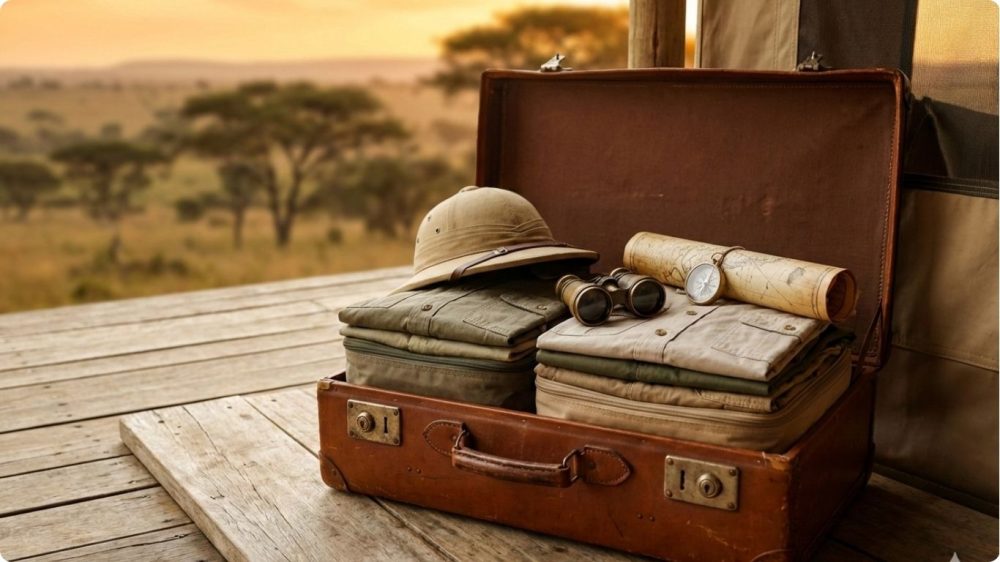
Here is the truth: most safari packing mistakes come from treating a safari like a generic vacation. It is not. Your days are built around early mornings, long bumpy drives, and lots of time outdoors where comfort matters more than fashion. The goal is simple – pack lighter than you think, but smarter than you usually do.
What to pack for safari depends on your safari style
Before you choose a single shirt, get clear on three variables because they change everything.
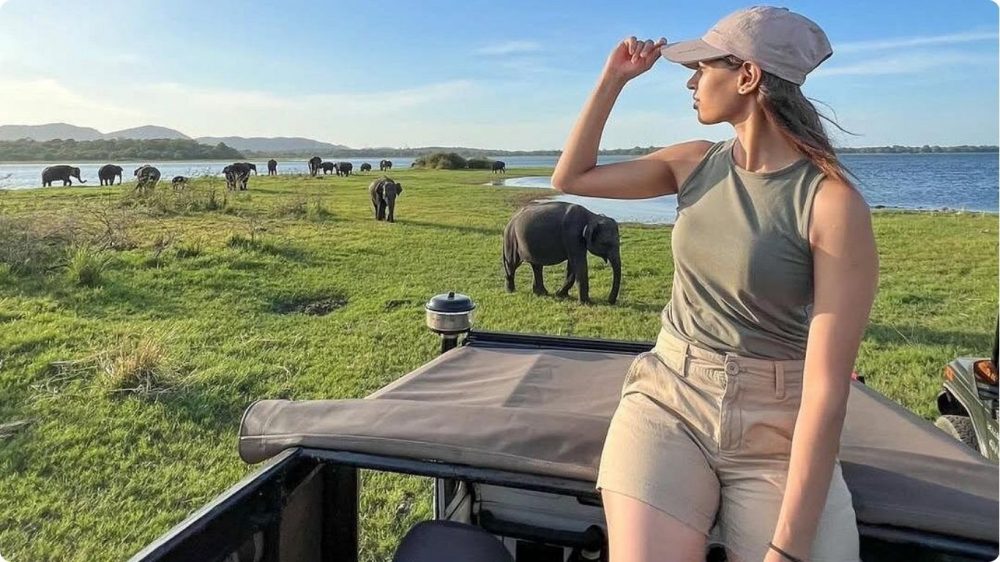
First, where you are going and when. East Africa in the dry season is a very different packing puzzle than southern Africa during shoulder season. Some places are hot and bone-dry by midday and surprisingly cold before sunrise.
Second, the type of safari. A fly-in lodge safari often has strict baggage limits and prefers soft-sided bags. A self-drive safari gives you more luggage freedom, but you will appreciate anything that packs small and stays organized because the vehicle becomes your closet.
Third, your comfort level with laundry. Many lodges offer same-day or next-day laundry (often at an extra cost, sometimes free). If laundry is available, you can pack fewer outfits and focus on the right layers.
If you want more planning help for the full trip flow – timing, regions, and what to expect – TravelInnTour.com has destination-first guidance that makes the decisions feel a lot less overwhelming.
Safari clothing that works in real life
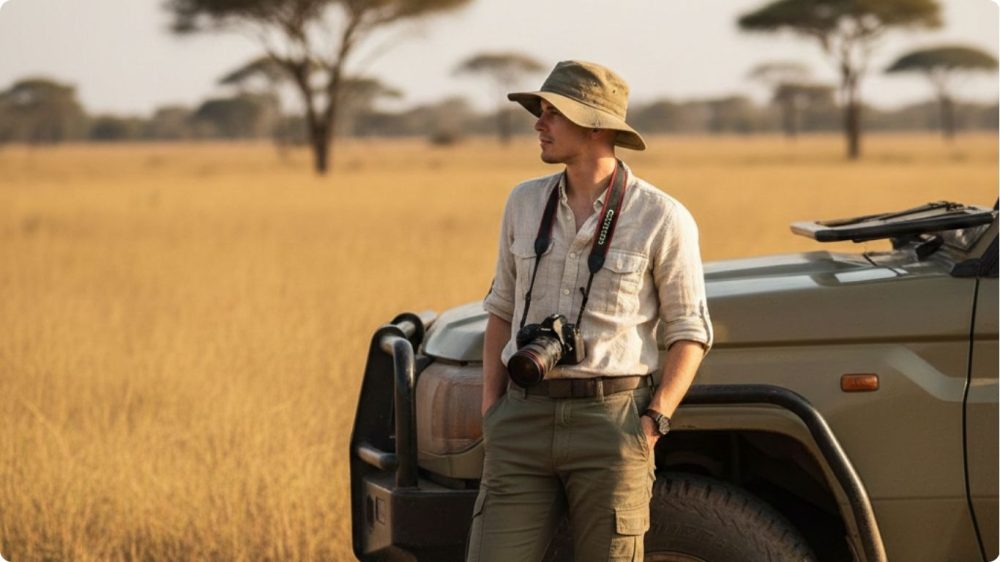
Safari clothes do not have to look like a costume. They just need to handle heat, dust, and movement – while keeping you comfortable for long stretches sitting in a vehicle.
Colors: go neutral, not bright
Neutral tones (khaki, tan, olive, muted gray) blend in and hide dust. Skip bright white because it shows everything, and skip very dark colors because they absorb heat.
One important trade-off: some destinations strongly advise avoiding blue and black because those colors can attract tsetse flies. If you are headed to areas where tsetse flies are common, treat that advice seriously and choose earthy tones instead.
Fabrics: choose breathable and fast-drying
Lightweight, breathable fabrics are your best friend. Think quick-dry performance material or light cotton blends. Early morning game drives can be cold, so you want layers rather than one bulky jacket.
If you hate feeling sweaty, moisture-wicking tops are worth it. If you hate the “tech” feel, light cotton can be fine – just accept it may dry slower if you get caught in a shower or wash something in the sink.
The core clothing set (and why it is enough)
For most 5-8 day safaris, you can build a strong wardrobe with a few repeatable pieces. You will realistically wear the same pants and layers multiple times, and that is normal on safari.
Bring two pairs of lightweight long pants. Long pants help with sun protection, scratchy brush, and evening bugs. Add one pair of shorts if you know you will want them at camp mid-day.
Pack three to five tops. Long-sleeve shirts are underrated because they protect from sun and mosquitoes, but short sleeves are comfortable in peak heat. A mix is ideal.
Add one warm mid-layer like a fleece or light insulated jacket. Dawn drives can feel cold, especially with wind in an open vehicle.
Finish with a light rain layer or windbreaker. Even in dry season, weather can change quickly, and a thin outer layer also blocks dust.
What to wear on game drives vs at camp

Game drives are about function: long pants, closed-toe shoes, layers you can add or remove fast. At camp, comfort takes over. A simple T-shirt, casual pants, or a sundress can feel great once the dust settles – just keep shoulders and legs covered if mosquitoes are active.
If your lodge has a nicer dinner vibe, you still do not need formalwear. “Smart casual” is usually plenty.
Shoes: keep it simple
You do not need heavy hiking boots unless your itinerary includes serious trekking.
A comfortable closed-toe walking shoe or trail sneaker is the workhorse. It protects your feet from dust and gives grip when stepping in and out of vehicles.
Add one easy camp shoe like sandals with a secure strap or a slip-on. Avoid flimsy flip-flops if the ground is rough or you will be walking in the dark.
If you are doing a walking safari, ask your operator what they recommend. Some prefer ankle coverage, while others are fine with sturdy trail shoes.
The small items that make safari feel effortless
This is where your safari turns from “I brought clothes” to “I am prepared.”
Sun protection you will actually use
A wide-brim hat is a safari classic because it works. A baseball cap is better than nothing, but it does not protect your neck and ears.
Bring sunglasses with good coverage, and pack sunscreen that handles sweat. A small lip balm with SPF helps more than people expect because wind and sun can be intense.
Bug protection: it depends where you are
In some camps you will barely notice bugs. In others, especially around water or during certain seasons, mosquitoes can be relentless.
Pack insect repellent and consider permethrin-treated clothing if you are mosquito-prone or traveling during higher-risk periods. If you are heading to a malaria-risk area, talk to a travel clinic about medication well in advance.
Dust management (yes, it is a thing)
Safari dust gets everywhere: in your hair, on your camera, in your day bag.
A simple neck gaiter or lightweight scarf is surprisingly useful on windy drives. A small pack of wet wipes helps you feel human again before lunch. And a reusable water bottle keeps you sipping without constantly opening plastic bottles in a dusty vehicle.
Luggage: soft-sided wins, and weight limits are real
If you are taking small bush flights, baggage limits can be strict and enforced. Soft-sided duffels are easier to load into small planes and safari vehicles than hard suitcases.
Even if your operator does not mention weight limits, packing light is still your friend. Camps can be spread out, storage can be tight, and you will move bags more than you think.
A medium duffel plus a daypack is the classic combo. Use packing cubes if you love organization, but do not overdo it. You want fast access to layers, not a puzzle.
Daypack essentials for every game drive
You will not want to dig through your main bag mid-drive, and you definitely do not want to forget the one item that makes the morning comfortable.
In your daypack, keep your camera or binoculars, an extra layer, sunscreen, lip balm, sunglasses, and a water bottle. Add tissues, wet wipes, and a small snack if your drive is long.
If you wear contacts, carry glasses as backup. Dust and wind can make contacts miserable on certain days.
Tech and camera gear without going overboard
You do not need a professional setup to get great photos, but you do need power.
Bring a phone power bank and the right plug adapter for your destination. Many safari rooms have limited outlets, and charging windows can be short if you are out most of the day.
If you are bringing a camera, prioritize a versatile zoom lens and extra memory cards. Dust is the enemy of lens changes, so fewer swaps is better. A simple microfiber cloth and a small blower help keep gear usable.
Binoculars are a big upgrade if you enjoy wildlife details. If you are traveling as a couple, one shared pair is often enough.
Health kit: pack for comfort, not fear
Most safari areas are far from big pharmacies, and even basic items can be hard to find. You do not need a suitcase of medical supplies, but you do want the essentials.
Bring any prescription meds in original containers, plus a copy of your prescriptions. Add pain relievers, allergy meds, anti-diarrheal medication, and motion sickness options if you get queasy on bumpy roads.
Blister care is a quiet hero. Even if you are mostly in a vehicle, camps can involve walking on uneven ground.
If you use a CPAP or specialty device, check power compatibility and bring what you need to keep it running smoothly.
Documents and money: keep it calm and organized
Keep your passport, vaccination documentation if required, travel insurance details, and confirmations in one place. A slim document organizer or zip pouch works well.
Cash tips are common in many safari destinations. Your operator can advise on local expectations, but it is smart to arrive with some small bills and a plan for how you will split tips between guides, trackers, and camp staff.
What people overpack (and do not miss)
Safari packing gets easier when you cut the “just in case” items that rarely earn their space.
You can skip multiple heavy jackets. One good warm layer plus a windproof shell usually covers early mornings.
You can also skip fancy outfits and extra shoes. Most people end up rotating the same two pairs.
And unless you have a specific need, leave the strong perfumes at home. Some camps discourage them, and they do not mix well with heat.
A quick reality check before you zip the bag
Try this: lay out everything you plan to bring, then remove one shirt, one “backup” item, and one pair of shoes if you packed three. You will almost never regret it.
Safari is one of those trips where the magic is outside your bag. Pack for the mornings that start in the dark, the afternoons that glow golden, and the evenings that feel like a fairytale around the fire – then leave a little space for the dust, the souvenirs, and the stories you will bring home.
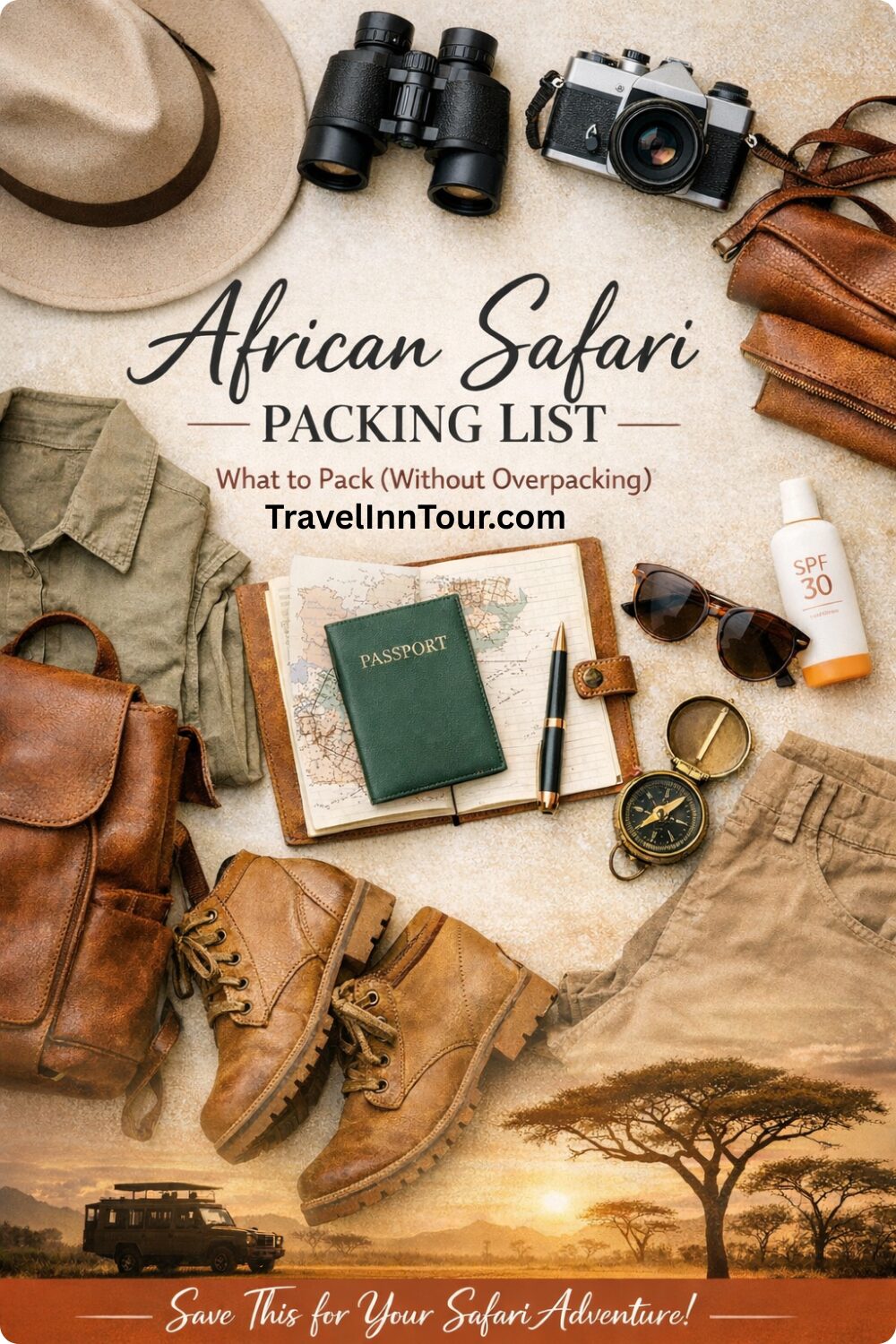
Save it On Pinterest





Leave a Comment