
You find the perfect location, the photos look dreamy, and then you hit the star rating and pause. Is a 3-star hotel a “budget” stay or a solid, comfortable base for exploring? Is a 5-star always worth it? If you have ever booked a trip at midnight with ten tabs open, you already know the truth: hotel stars can feel like a promise, a mystery, and a marketing tool all at once.
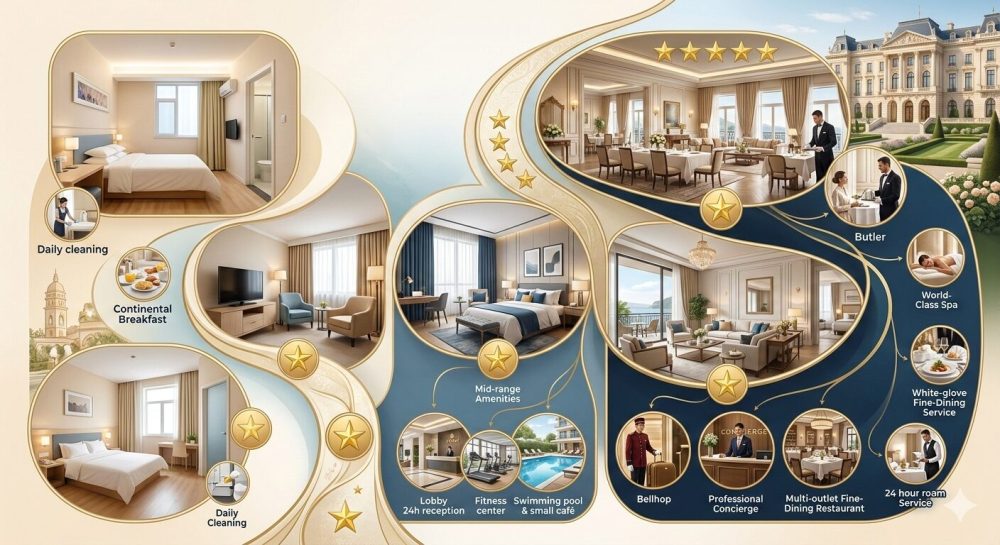
What do hotel stars mean, really?
At the simplest level, hotel stars are a shorthand for the level of amenities, services, and overall “fullness” of the hotel experience. More stars usually means more on-site features (like a restaurant, gym, concierge), more service (like daily housekeeping and room service), and a higher standard for facility quality.
But here is the nuance that saves travelers real money and real frustration: star ratings are not universal. A 4-star in one country may feel like a 3-star somewhere else. Some star systems are regulated by tourism boards. Others are assigned by private organizations. And on many booking platforms, the “stars” you see can be a mix of official ratings, internal algorithms, and property self-reporting.

So yes, stars can help you narrow options fast. They just should not be the only factor you use to choose where you will sleep after a long travel day.
Who decides a hotel’s star rating?
This depends on where you are booking.
In some destinations, a government tourism authority or a recognized hospitality body sets standards and inspects properties. In others, stars come from independent rating groups or industry associations. And then there is the internet layer: online travel agencies and review platforms sometimes display their own “star category” based on amenities, price band, location norms, and even what the hotel claims to offer.
That is why two different sites can show the same hotel with different star levels. It is also why travelers sometimes arrive expecting a luxury vibe and get a perfectly fine, slightly dated room with a great location instead.
A practical mindset: treat the star rating as an initial filter, then verify with photos, recent guest reviews, and the hotel’s actual list of amenities.
What you can usually expect by star level

Stars are not a universal language, but there are common patterns. Use these expectations as a baseline, then adjust for the destination and the price point.
1-star and 2-star hotels: basic and budget-forward
These are typically no-frills stays focused on a clean bed and a functional bathroom. You may see limited front desk hours, minimal staffing, and fewer services like daily housekeeping. Properties might be older, smaller, or designed for quick overnights.

A 2-star can still be a win if you plan to spend your time out exploring and you value saving money for experiences – street food tours, museum tickets, or that extra day on your trip.
3-star hotels: the “sweet spot” for many trips
A 3-star hotel often means you get comfort without paying luxury prices. Expect a staffed front desk, regular housekeeping, and a wider range of room types. Many 3-stars offer breakfast (sometimes included, sometimes not), reliable Wi-Fi, and conveniences like a small gym or business corner.
For families, couples, and solo travelers who want a dependable base near the action, 3-star is frequently the most efficient choice.
4-star hotels: upgraded comfort and service
Four-star properties usually step up the experience: more polished design, more consistent service, more on-site features, and often a better restaurant or lounge scene. Rooms are commonly larger or better equipped, and you may see nicer bedding, higher-quality toiletries, and stronger soundproofing.
This is a strong pick for trips where the hotel is part of the vacation – think romantic weekends, milestone birthdays, or a city break where you want a relaxing landing spot after long walking days.
5-star hotels: luxury, attention, and “everything handled” energy
A true 5-star stay is built around exceptional service and a refined environment. This can mean concierge-level planning, elevated dining, spa facilities, high-end finishes, and staff-to-guest ratios that make the hotel feel effortless.
That said, not every expensive hotel is a true 5-star experience, and not every 5-star will match your travel style. If you hate formality, a 5-star with a strict vibe might feel less enjoyable than a friendly boutique 4-star with personality.

Why star ratings can mislead you
Stars measure inputs – amenities, services, facilities – more than the lived experience of staying there.
A hotel can earn stars for having a restaurant, meeting rooms, valet parking, and a full-service front desk. That does not automatically mean the rooms are quiet, the mattresses are great, or the Wi-Fi works on the fifth floor.
Stars also do not reliably capture the things travelers care about most, like:
- Location convenience for your itinerary
- Noise levels and sleep quality
- Staff warmth and problem-solving
- Maintenance and cleanliness consistency
- Whether the vibe fits your trip (romantic, family-friendly, party, quiet)
This is why a well-reviewed 3-star in a perfect neighborhood can beat a poorly managed 5-star that looks glamorous but feels stressful.
Stars vs. guest reviews: which should you trust?
Use both, but for different jobs.
Stars help you set expectations and filter quickly. Reviews help you predict your actual experience. If you are choosing between two similar hotels, prioritize recent reviews from travelers like you. A couple’s weekend and a family road trip have very different definitions of “great stay.”
Also pay attention to review patterns, not one-off complaints. If ten people mention thin walls, believe them. If multiple reviews praise breakfast and staff helpfulness, that is a good sign the property delivers where it counts.
Boutique hotels, resorts, and all-inclusives: where stars get fuzzy
Boutique hotels sometimes score lower in star systems because they intentionally skip certain amenities like large gyms, pools, bell staff, or multiple dining outlets. But many boutique stays deliver high design, great beds, and a memorable atmosphere that feels more special than a standard chain hotel.
Resorts can be the opposite. They may rack up amenities – pools, spas, multiple restaurants, kids clubs – and earn a high star category even if the rooms are dated. If you are booking a resort, check room renovation dates and look closely at guest photos.
All-inclusive resorts add another layer: value and quality can vary wildly even within the same star bracket because food, drink, entertainment, and service consistency are a huge part of the experience.
What to look at besides the stars (so you book with confidence)
When you are deciding where to stay, stars are just your first pass. The next steps are where smart trip planning happens.
Start with location in relation to your actual plans. A slightly lower-star hotel that puts you in the right neighborhood can save hours of transit and make the trip feel easier. Then check the details that affect your day-to-day comfort: air conditioning quality (critical in hot climates), elevator access, bed type, room size, and whether breakfast is included.
Next, scan recent guest photos. Professional images are designed to sell the dream. Guest photos show what you will really see when you walk in: wear and tear, lighting, bathroom size, and the true condition of the pool or gym.
Finally, look for “deal-breakers” hidden in policies. Resort fees, parking costs, deposit requirements, and strict cancellation terms can turn an apparent bargain into a stressful surprise.
If you want more decision-support travel planning like this, you can find destination and stay-style guidance on TravelInnTour.com.
A quick way to choose the right star level for your trip
If your trip is experience-first – national parks, day tours, beaches, museums, nightlife – a strong 3-star or value-focused 4-star is often perfect. You want reliability, good sleep, and a location that keeps your days smooth.
If your trip is hotel-first – honeymoon energy, resort lounging, spa weekends, special celebrations – start at 4-star and evaluate 5-star options based on vibe, reviews, and what is actually included.
If your trip is budget-first – quick city stop, road trip, last-minute flight deal – a well-reviewed 2-star can be the smartest choice, especially if you will be out most of the time and you can verify cleanliness and safety through recent feedback.
The closing thought that makes booking easier
Let hotel stars set your expectations, not your excitement. The stay that feels like “magic” is the one that matches your travel style – the right neighborhood, the right comfort level, and the right trade-offs for how you want to spend your time once you step outside the lobby.





Leave a Comment