
Japan gets a lot of first-trip wish lists wrong. Travelers try to squeeze Tokyo, Kyoto, Osaka, Hakone, Hiroshima, Nara, and a rural onsen town into eight days, then wonder why the trip feels like a blur instead of the magic they pictured.
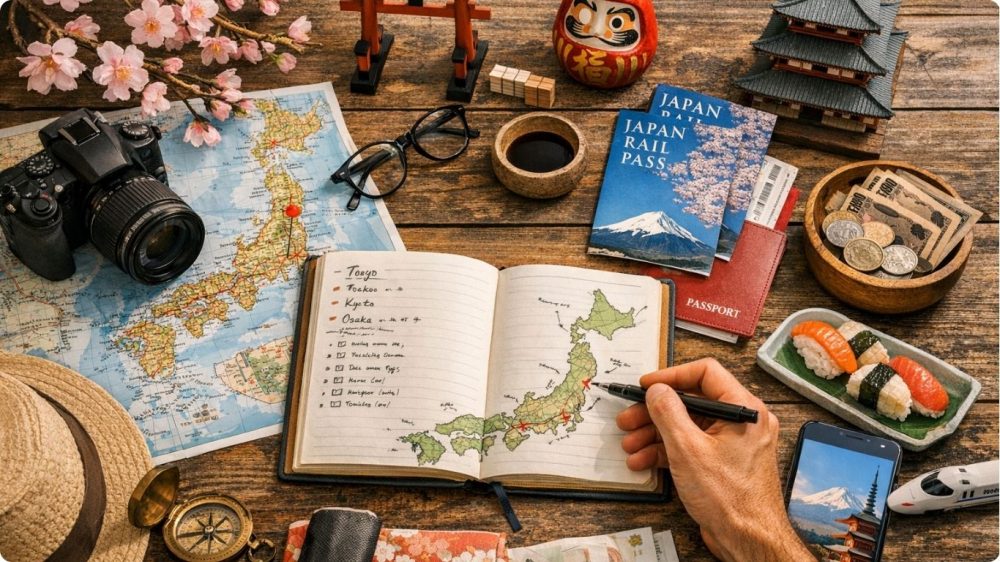
If you want a Japan vacation that feels exciting instead of exhausting, the real skill is not finding more places to add. It is learning what to leave out. Once you do that, building your route becomes much easier.
How to build a Japan itinerary without overpacking it

The best Japan itinerary starts with three choices: how many days you have, what kind of trip you want, and how fast you like to travel. That sounds simple, but it saves you from the biggest planning mistake – treating Japan like a checklist.

For most first-time visitors, 7 to 10 days is enough for two to three bases. With 10 to 14 days, you can comfortably add a third or fourth stop if the route is efficient. If you have less than a week, staying focused is the smartest move. Tokyo and Kyoto alone can fill a memorable trip.
Think in terms of travel style before geography. Do you want neon city energy, temples and tradition, food-focused neighborhoods, anime and shopping, mountain scenery, hot springs, or family-friendly attractions? Japan can do all of it, but not all at once. A couple looking for romance may build around Kyoto, Hakone, and Tokyo. A family may prefer Tokyo and Osaka with easy day trips. A solo traveler might want Tokyo, Kyoto, and a smaller town for contrast.
Pace matters just as much. Some travelers are happy changing hotels every two nights. Others lose energy every time they repack. If you know you hate transit stress, choose fewer hotel moves and use day trips strategically.
Start with your flight and arrival reality
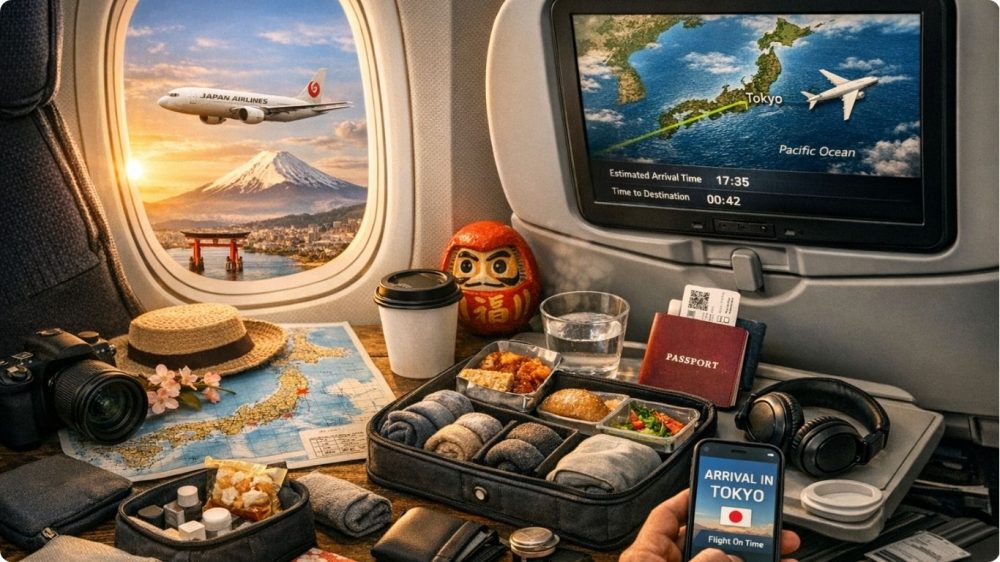
Before you sketch cities on a map, look at your actual flight options from the US. A beautiful route on paper can fall apart if it adds awkward airport transfers or forces you to backtrack.
Most international travelers arrive through Tokyo or Osaka. If prices are similar, an open-jaw trip often works well. That means flying into Tokyo and out of Osaka, or the reverse. It cuts down on repeat train time and helps your itinerary flow in one direction.

Also be honest about jet lag. Your first day in Japan is rarely your most productive sightseeing day. If you land in the afternoon or evening, keep that arrival day light. Plan a neighborhood stroll, a casual dinner, and an early night. Saving your biggest museum day or temple marathon for day one usually backfires.
Pick 2 to 4 bases, not 8 destinations
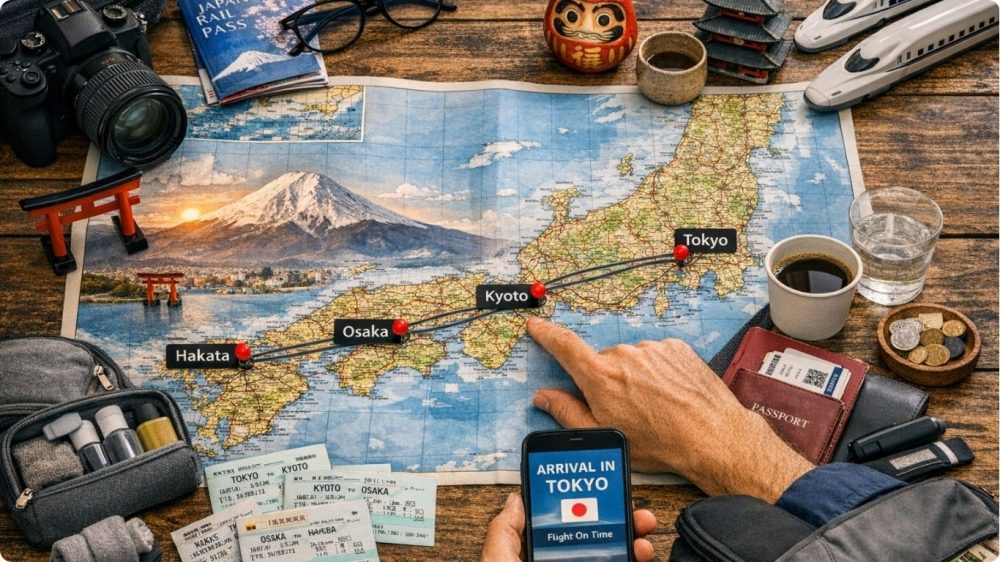
This is where a dream trip starts taking shape.
A base is the city or town where you sleep, not every place you visit. That distinction changes everything. You do not need to stay overnight in Nara if you are already based in Kyoto or Osaka. You do not need a separate hotel in Kamakura if you are staying in Tokyo.
For many first-time itineraries, these combinations work well:
- Tokyo + Kyoto for a shorter, classic trip
- Tokyo + Kyoto + Osaka for a balanced first visit
- Tokyo + Hakone + Kyoto + Osaka for variety with a scenic break
- Tokyo + Kyoto + Hiroshima for travelers who want history and depth
There are trade-offs. Osaka and Kyoto are very close, so some travelers stay in only one of them. Kyoto gives you a more traditional atmosphere and easier access to temples. Osaka gives you nightlife, food energy, and often slightly easier hotel value. If you like calmer mornings and culture-heavy days, Kyoto may be the better base. If you want lively evenings and a central transport hub, Osaka can be the better pick.

Use a simple planning framework for each stop
Once you choose your bases, give each one a role. This is the easiest way to avoid building a trip that feels random.
Tokyo might be your big-city adventure base. Kyoto might be your culture and temple base. Hakone could be your scenic reset. Osaka may become your food and nightlife stop. When each place has a purpose, it is easier to decide what belongs there.
Then map your days in layers. First, assign one anchor experience per day. That could be Shibuya and Shinjuku in Tokyo, Fushimi Inari in Kyoto, or a ryokan stay in Hakone. Second, add one or two nearby supporting activities. Third, leave breathing room for meals, transit, and spontaneous finds.
That last part matters. Japan rewards wandering. Some of the most memorable moments happen in a quiet side street, a basement food hall, or a tiny neighborhood shrine you never planned to see.
Group sights by area, not by popularity
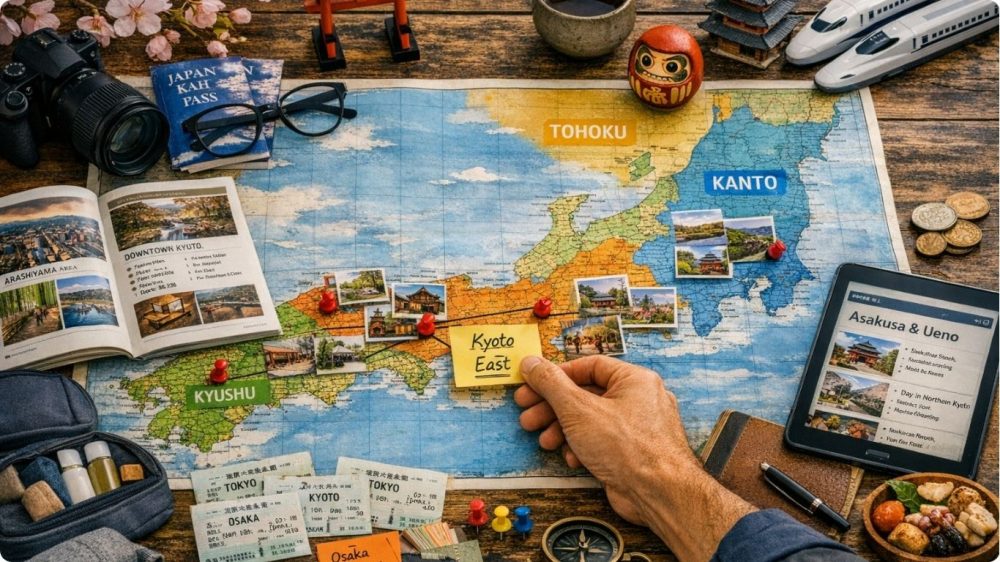
One of the smartest ways to figure out how to build a Japan itinerary is to stop planning by bucket-list ranking and start planning by neighborhood.
Tokyo is enormous. Kyoto is more spread out than many first-time visitors expect. If you bounce across a city to hit only the “top” attractions, you lose time and energy in transit.
Instead, cluster sights that naturally fit together. In Tokyo, Asakusa and Ueno can work well on the same day. Shibuya and Harajuku make sense together. Shinjuku often pairs well with nearby nightlife or a skyline view. In Kyoto, Southern Higashiyama works better as one focused day than mixed with Arashiyama on the opposite side of the city.
This is where your itinerary starts feeling smooth. Shorter travel times mean less stress, fewer missed reservations, and more room for the fun part of the trip.
Leave space for day trips, but do not force them
Day trips can add wonder to a Japan vacation, especially if you want variety without another hotel check-in. Nara, Kobe, Kamakura, Nikko, and Hiroshima are common additions depending on where you are based and how much time you have.
But day trips are not mandatory. If your trip is already packed, skipping them may actually improve the experience. Tokyo and Kyoto can easily fill several full days each. The goal is not to prove how much ground you covered. The goal is to come home feeling like you actually experienced Japan.
A good rule is to add a day trip only if you have at least two full days in your main base after arrival. That way you are not sacrificing the core destination just to say you squeezed in somewhere else.
Match your itinerary to the season
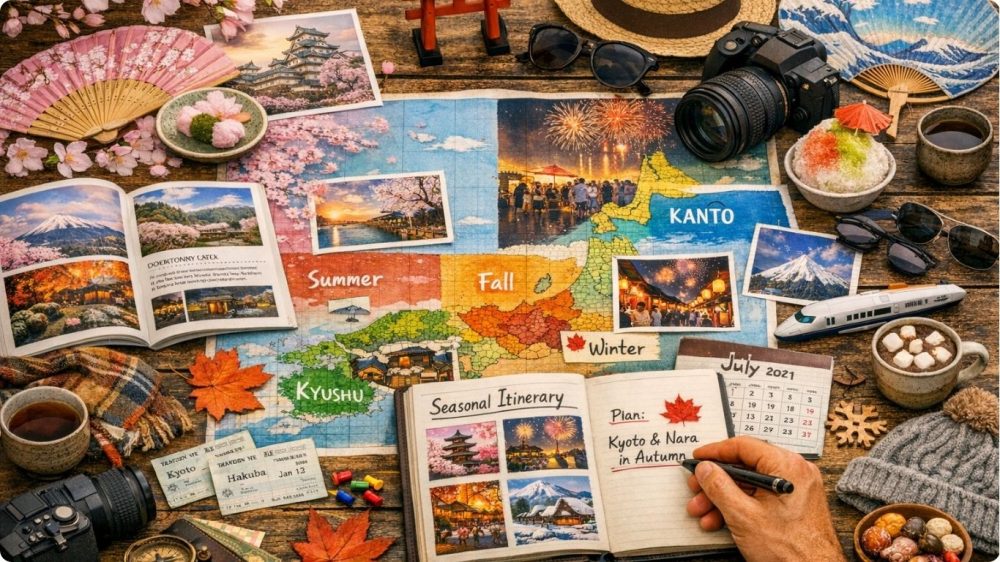
Japan changes dramatically by season, and that should shape your route.
Spring brings cherry blossoms, big crowds, and higher prices in popular areas. Fall has gorgeous foliage and a similar surge in demand. Summer offers festivals and long daylight hours, but also heat and humidity, especially in cities. Winter can be fantastic for hot springs, snow scenery, and lower crowds in many places, though daylight is shorter and some rural areas take more effort to reach.
This affects more than what to pack. It can influence how many stops you should attempt. In peak blossom or foliage seasons, transit hubs and attractions are busier, so a slower route often feels better. In winter, adding a mountain or onsen stop can be especially rewarding. In summer, families may prefer building in indoor attractions, lighter midday plans, or coastal breaks.
Budget for movement, not just hotels
A Japan itinerary can look affordable until transportation starts stacking up. Long-distance trains, airport transfers, local subways, and luggage forwarding all affect your real cost.
That does not mean you should avoid moving around. It means each move should earn its place. If a destination requires half a day of travel each way and only gives you a quick photo stop, it may not be worth it. If it gives your trip a completely different mood, such as a ryokan stay with an onsen and mountain views, it might be one of the best splurges you make.
This is also where beginners often overspend by chasing too many famous places. Fewer bases often means lower train costs, fewer hotel transitions, and a calmer trip overall. Travel Inn Tour readers usually do best with itineraries that feel ambitious but still realistic.
A sample rhythm that works for first-timers
If you are stuck, use this as a starting point rather than a rigid formula. For a 10-day trip, many travelers do well with four nights in Tokyo, one night in Hakone or another onsen town, three nights in Kyoto, and two nights in Osaka or one of those cities plus a day trip.
That rhythm gives you contrast. Tokyo brings the electric start. Hakone adds a scenic pause. Kyoto delivers history, temples, and traditional atmosphere. Osaka closes with food, nightlife, and easy access to a final outing if you still have energy.
If that still feels busy, cut one stop. A simpler trip is often the one you remember most fondly.
Book the hard parts first
Once your route is set, lock in the pieces that can shape the rest of your trip: international flights, first and last hotels, special stays like ryokans, and any high-demand experiences you care deeply about.
After that, keep your daily plans flexible. You do not need every hour mapped out. You need a clear route, realistic pacing, and enough structure that each day has direction.
That is the real secret to building a Japan itinerary that works. Not stuffing your trip with more, but choosing the right experiences in the right order so the whole journey feels effortless, exciting, and full of those small unforgettable moments Japan does so well.
Build for your energy, not someone else’s highlight reel, and your trip will have a much better chance of feeling like the one you actually dreamed about.
Save It On Pinterest





Leave a Comment